
In September of 2022 the European Union passed the Digital Markets Act (DMA), a sweeping regulatory framework explicitly targeting large, foreign tech companies - or so-called "gatekeepers" - like Google, Apple, Meta, Amazon, Microsoft, and ByteDance. Among other restrictions, the DMA limits these companies from offering integrated services in an bid to boost homegrown competition in Europe’s stagnant digital economy.
Since its enactment, a host of critics - including academics, economists, industry players, and consumer groups - have sounded the alarm on the DMA’s unintended consequences. Two years later, these fears have materialized, resulting in a "Digital Curtain" around Europe, reminiscent of the Iron Curtain that once separated Eastern and Western Europe.
Touted as a catalyst for European innovation and competition, the Digital Markets Act has done the opposite: isolating European consumers from the full potential of the digital age.
From disjointed consumer experiences to delayed product rollouts, the evidence is clear: the DMA has drawn a digital curtain around European users, shrouding them in a degraded digital economy.
Consequence
European consumers are grappling with more fragmented, less intuitive digital services. From disjointed search results to cumbersome app installations, the DMA has introduced friction where seamless integration once prevailed.

Consequence
The forced modularity mandated by the DMA has created security gaps and exposed users to greater cybersecurity threats. Requiring third-party app stores and sideloading has created new vectors for malware and privacy breaches, compromising user data.

Consequence
The DMA has created an environment of regulatory uncertainty for tech innovators, causing significant delays in the rollout of cutting-edge technologies in Europe. From AI-powered features to new social media platforms, European users are increasingly finding themselves behind the global curve in accessing the latest digital innovations.
In some cases, companies have been forced to remove features entirely from their European offerings to comply with the DMA, leaving EU consumers with less capable versions of popular services compared to their global counterparts.
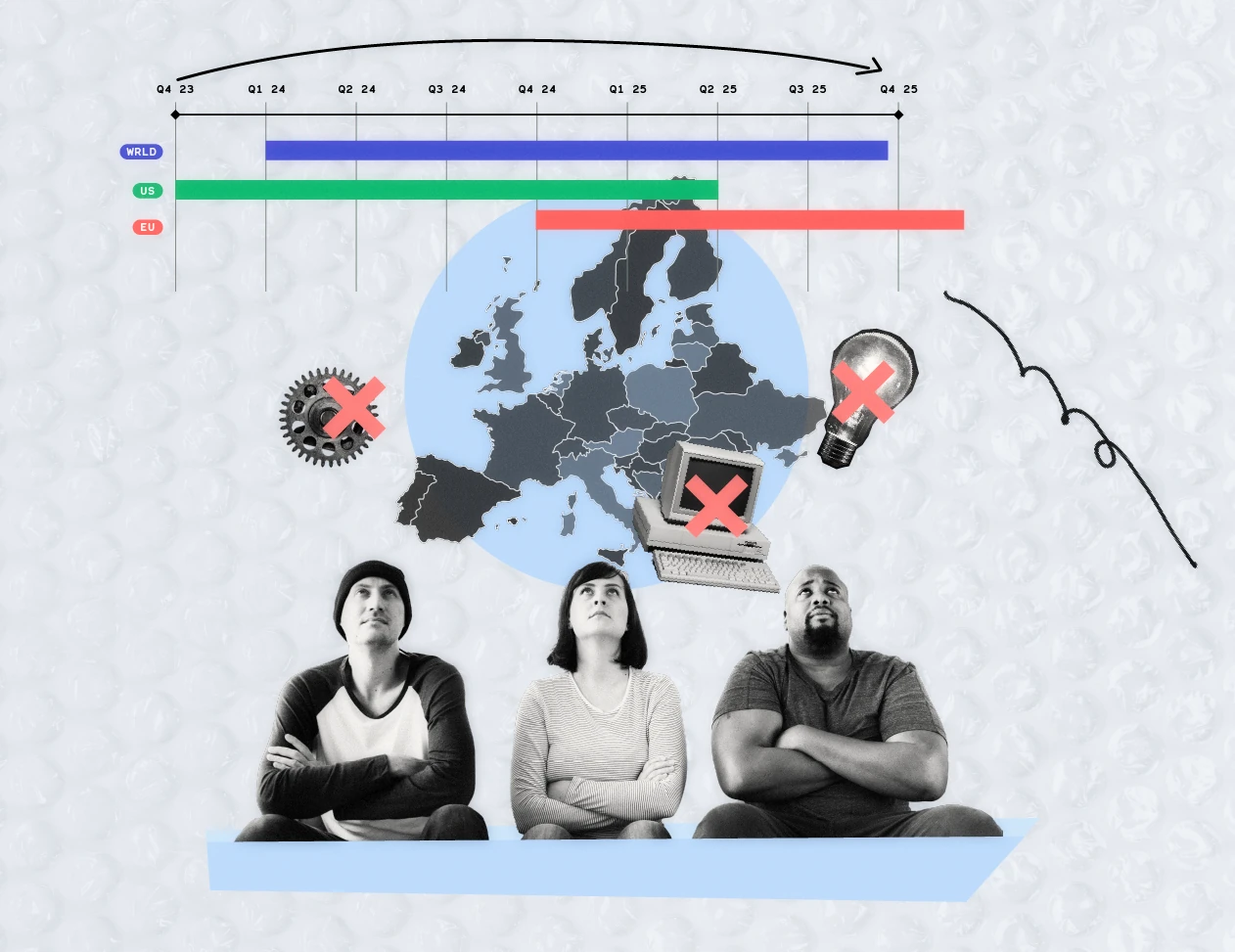
Chamber of Progress outlined the DMA’s specific consequences in a first-of-its-kind report highlighting 10+ examples of worsened consumer experiences on popular apps and services. The DMA means that European consumers are missing out on customized job recommendations on LinkedIn, integrated search results on Google, new AI tools from Apple and Meta, and much more.
Global policymakers should see Europe’s experience under the DMA as a cautionary tale. Before embracing similar regulations, other jurisdictions must consider whether they want to join Europe behind its Digital Curtain – or whether their citizens and economy would be better off enjoying faster technological advancement outside.
Download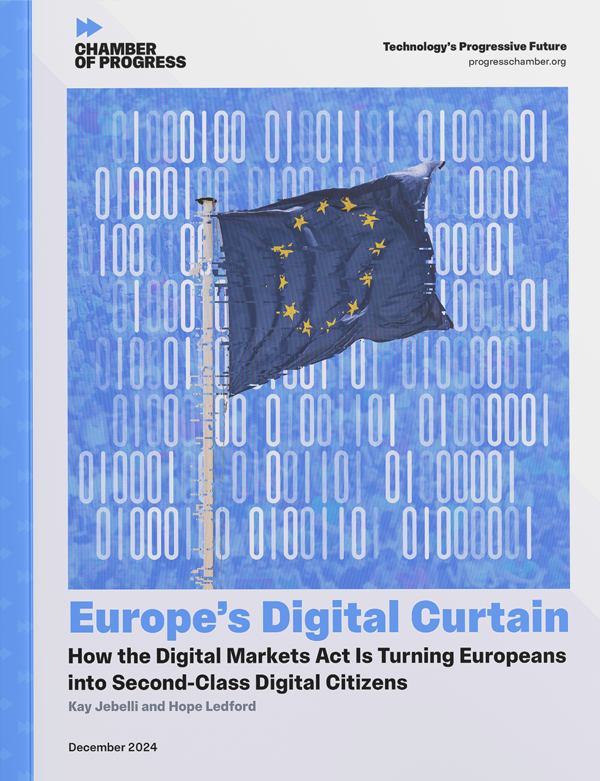
European consumers will miss out on Apple’s new HomeView smart home hub because of the DMA, AppleInsider reports. The device combines conversational Siri AI, music, FaceTime and smart home controls, with personalised assistance drawing on a paired iPhone or iPad. It launches on 13 November in markets including the US, UK and Canada. Apple confirms that HomeView is “not available for sale in the European Union” because Siri AI remains unavailable on iOS there. No EU launch date has been announced.
The exclusion further extends the European Commission’s refusal to accept Apple’s “Trusted System Agent” solution to give third-party agents access to hardware and software features of iOS. Since June, the Commission and Apple have not been able to resolve the Commission’s demand for access with Apple’s concerns over its users’ privacy and security. The inability to reach a resolution now affects not just the launch of the Siri AI feature in Europe, but the launch of an entire new device: HomeView is built around Siri AI, and removing that integrated agent would strip away a central part of its usefulness and appeal to consumers. Apple says it is working with the EU to find a path forward. In the meantime, the Commission’s enforcement of the DMA is leaving European users behind on the integrated AI experience that other jurisdictions get to enjoy.
Google has begun rolling out changes to European search results following the European Commission’s €460 million DMA fine. The redesign gives comparison services greater prominence while pushing hotel, airline and restaurant listings below them, with useful features such as real-time prices removed. Users outside the EU will be unaffected.
Google says “the changes mark the largest reduction in quality of service at the world's most popular internet search engine in its 29-year search history.” Google warns that the changes will worsen Europeans’ experience and boost intermediaries at local businesses’ expense.
The Commission’s own decision acknowledges that Google’s product units help users find what they are looking for. Yet it says those benefits are not decisive when assessing compliance: “The legislator deliberately opted against allowing for this sort of efficiency defence” (recital 189). The Commission recognises but nevertheless ignores the user benefits of Google’s integrated search results, including with respect to maps (recital 515), translations (recital 525) or sports scores (recital 573) as irrelevant to determining self-preferencing, leaving user interests to the assessment of compliance measures.
The Commission argues that Google could preserve useful features by giving rivals equivalent prominence. But with the resulting redesign now rolling out, Europeans face another reminder of the Digital Curtain: regulatory enforcement in practice resulting in the loss of features that users value. What’s worse here is that the Commission has explicitly disclaimed any concern for the impact its decisions are having on users.
Apple has confirmed that EU users will not get its new Siri AI features when iOS 27 and iPadOS 27 launch, citing the Digital Markets Act. The delayed release includes a redesigned, conversational Siri that can search across messages, emails, photos and apps, take screen-aware actions, draft and edit content, and power new Visual Intelligence and Camera modes — the kind of assistant iPhone users have been waiting years for. Apple says it tried to find a path to compliance, developing a “Trusted System Agent” that would let other virtual assistants safely access the same features as Siri AI, and proposed rolling Siri AI out in the EU over 18 months alongside that solution. According to Apple, the European Commission said no. As a result, there is no timeline for when European users — or EU-based developers building on the new APIs — will get access. It’s the latest example of integrated, AI-powered experiences arriving everywhere else first while Europeans are left waiting, a pattern detailed in our Report.
Google’s latest I/O announcements bring another reminder that European users are increasingly missing out on the latest innovations. Several of Google’s newest AI-powered products and features are launching in the U.S. first, or are explicitly U.S.-only at launch, including Gemini Spark, Daily Brief in the Gemini app, AI Inbox in Gmail, Universal Cart, Ask YouTube, and new agentic Search tools that can call businesses or build persistent custom mini-apps. These are precisely the kind of integrated, cross-product AI experiences that consumers elsewhere will be able to try first while Europeans are left waiting.
The delay is not happening in a vacuum. Google has warned that regulatory burdens and uncertainty under the DMA are delaying the launch of new AI features in Europe “by up to a year,” and the DMA’s interoperability obligations add particular complexity for deeply integrated services. Article 6(7), for example, requires gatekeepers to give third parties access to proprietary and embedded operating system, hardware, and software features, free of charge. That means new AI assistants and agents built to work across Search, Gmail, Calendar, Android, Chrome, YouTube, Wallet, and other services must be assessed not only as consumer innovations, but as potential interoperability obligations. The added complexity and potential security risks mean that European users risk receiving a slower, thinner version of the digital future.
A new research paper reports broad consumer discontent with the impact of the EU's Digital Markets Act. A survey of 3,500 consumers across seven central and eastern European countries finds that four in ten EU consumers say more steps are needed to navigate digital platforms than before, and one-third say the experiences are less seamless and more confusing since the DMA came into effect. The authors find that, "[t]he promise of better services at fairer prices thus rings hollow so far – improvements are either too subtle, too inconvenient, or too opaque for consumers to appreciate." These findings echo our report, which shows widespread concerns that EU consumers are facing a degraded consumer experience.
Apple’s release announcement of the AirPods Pro 3 brings bad news for European consumers. While users in the rest of the world will benefit from AI integration that will allow the live translation of incoming audio, in real time, this feature won’t work in the EU, at least not at launch. The DMA makes any product integration particularly difficult for Apple and other designated Gatekeepers, because it requires that anything they build for themselves (even integrated), is also made available to rival services. This makes it harder to release integrated services in Europe because of the technical hurdles of engineering them to be open instead of integrated. This has led to Europeans missing out on new apps and services, as detailed in our Report.
A decision by the European Commission on the definition of "business users" as applied to Meta's Facebook Marketplace resulted in the removal of between 150,000 and 200,000 European users from the platform. The Commission chose to categorise as business users, any user with 28 or more listings a month with 80% or more listings being made in the same category (per the original designation decision). This meant that super-users with more active listings were categorised as business users, and had to be removed for Marketplace to be categorised as a consumer-to-consumer platform. This meant European users of Marketplace had access to fewer listings and/or were themselves kicked off the service if they were too active, because of the DMA. The decision was only made public in July 2025.
Europe's biggest carriers, easyJet and International Airlines Group (which includes Iberia and Aer Lingus) are blaming the EU's Digital Markets Act for driving up airline fees. The law forced Google to drop its flights tool, which allowed consumers to compare flights in the main search results and buy from the airlines directly. Now, the search engine must prioritise results from Skyscanner, Kayak, and Expedia, which means passengers are vulnerable to "unexpected fees", and airlines have to pay to advertise on the rival platforms. Unlike these search engines, Google does not charge airlines to show flight results. EasyJet said, "The DMA-induced changes in the EU led to a significant shift in traffic from Google Flights to other vertical search services such as online travel agencies and metasearch engines. This shift has diluted easyJet's direct web sales, impacting our ability to offer customers the best value and service."
The DMA’s “forced openness” further erodes user safeguards: Apple recently confirmed that it must allow an adult-content marketplace onto iPhones in the EU—overriding long-standing App Store guidelines that previously barred adult-oriented themes or graphic content. Parents who relied on Apple’s strong content policies now face new worries about the spread of explicit apps on devices used by their children. By compelling gatekeepers like Apple to admit third-party marketplaces and sideloaded apps, the DMA has undercut the robust parental controls and moderation practices that once helped prevent unauthorized or age-inappropriate downloads. Much like earlier concerns around the proliferation of unvetted or malware-laden apps, this situation highlights the troubling tension between “openness” and the beneficial gatekeeping when platforms take steps to protect consumers or moderate content.